Hey, I’ve been publishing my ‘inner voice’ content on Twitter for a while and I’d love to share also the ones that are related with EigenLayer ecosystem here.
Here is the full image:

Let’s dive into the world of intersubjective faults and how $EIGEN brings a revolutionary approach to consensus! ! 
JUST FOLLOW THE INNER VOICES ! 
1/13 
$EIGEN: THE UNIVERSAL INTERSUBJECTIVE WORK TOKEN
Don’t start with “WTF IS INTERSUBJECTIVE???” 
First, let’s start with a TL;DR for general context!

2/13
“We call this ‘intersubjective’ faults”
Ok bro but, what’s fault?
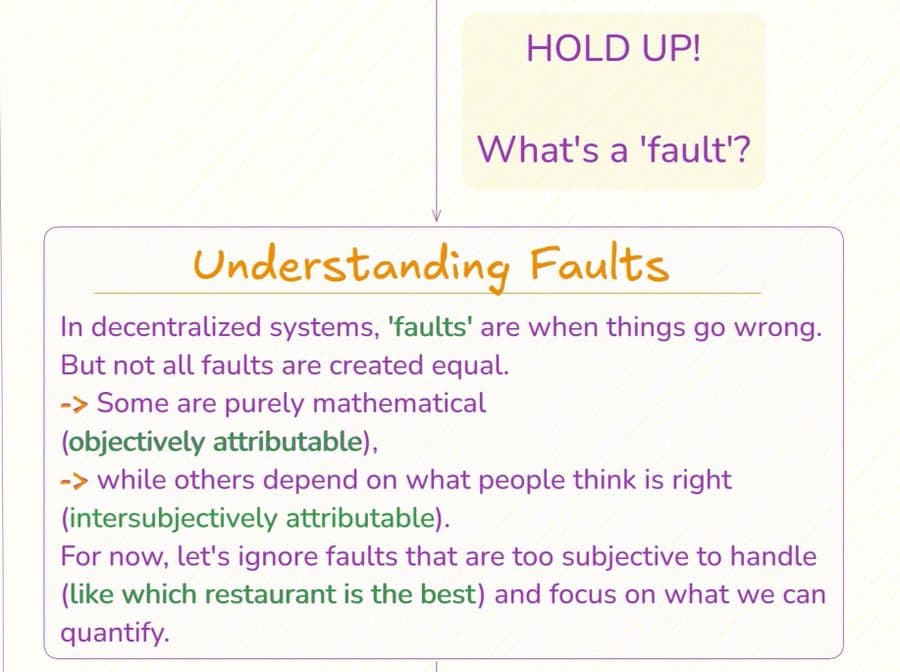
3/13
Let’s categorize faults if we understood what they are!
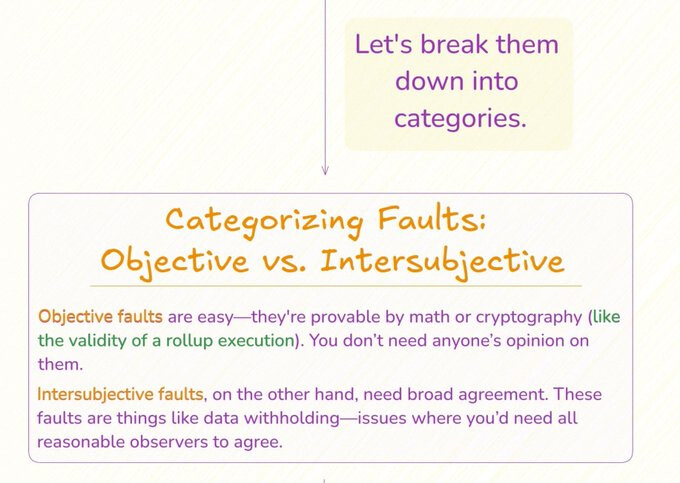
4/13
You can tell me that you’re confused because of terms but STAY WITH ME, we’re connecting them!
And also an important question: Why don’t we punish people without worrying about anything?

5/13
I guess we have bigger problems than we think…
We need a suitable piece that fit for that problem. Hmm

6/13
Here it is with a fancy description! $EIGEN THE UNIVERSAL INTERSUBJECTIVE WORK TOKEN!

7/13
EIGEN is designed to address ‘intersubjective faults’
It’s so cool! But,
How is the process handled? What are the core ideas that EIGEN is built on

8/13
We have something FORKS here!
Two-Token System comes with two tokens which are
bEIGEN & EIGEN
Let’s see these tokens

9/13
Cool! But, why two tokens?

10/13
Forking mechanism can work better for isolation BUT which version of bEIGEN will be used after fork?
How will be decided?
Let’s see

11/13
That’s enough philosophy and understanding the core ideas for today.
Let’s see the properties of $EIGEN

12/13
As all good things come to an end, we have come to the end of this article 
FEEDBACKS ARE APPRECIATED AND MY DM IS READY FOR YOU!
THANK YOU FOR READING!
13/13
